When it comes to villa interior design, there’s no one-size-fits-all approach. Your villa should reflect who you are, your tastes, your lifestyle, and how you like to live. And while furniture and décor play a big role in achieving that, it all starts with the architecture itself.
Here are some of our favorite architectural design ideas to help you create a villa interior design in Dubai you’ll love coming home to.
Embrace volumetric ceiling variations:
Ceilings need not remain flat and predictable across every room. Introducing varied ceiling heights, from dramatic double-volume spaces in living areas to cozier lowered ceilings in bedrooms, creates distinct emotional zones. A soaring ceiling invites openness and airiness, while a compressed ceiling fosters intimacy and warmth. This architectural play with vertical space adds profound character without cluttering the floor plan.
Craft fluid spatial transitions:
Rooms should connect seamlessly, allowing movement without harsh interruptions. Instead of standard doorways, consider wide openings, partial walls, or subtle changes in flooring material to signal a shift in function. A sunken living area or a raised dining platform establishes zones within an open layout, preserving visual connection while defining purpose. This fluidity encourages natural interaction between spaces.
Integrate architectural greenery:
Plants serve as living architectural elements, softening hard lines and injecting vitality into the interior. Design dedicated alcoves, vertical gardens, or internal courtyards that bring foliage directly into the living environment. Positioning greenery near windows or under skylights ensures these natural features thrive, creating dynamic focal points that change with the seasons. This connection to nature grounds the entire design.
Manipulate natural light as a material:
Windows, skylights, and glass walls become instruments for choreographing daylight throughout the day. Position openings to capture morning sun in breakfast areas and afternoon light in reading nooks. Consider light shelves or reflective surfaces that bounce sunlight deeper into the interior, reducing reliance on artificial illumination. This thoughtful manipulation turns sunlight into an active design component.
Design for tactile material contrast:
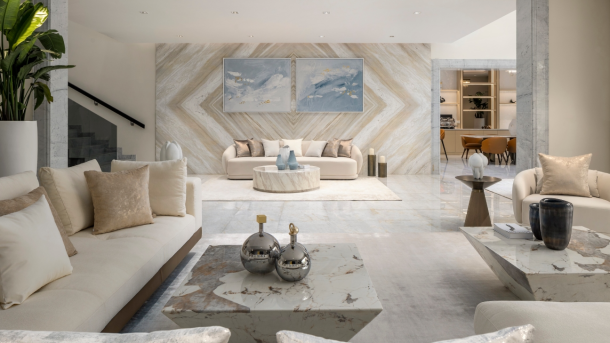
Visual interest deepens through the interplay of different textures across surfaces. Pair the roughness of natural stone with the smoothness of polished timber, or place cool metal against warm, woven fabrics. This sensory variety invites touch and enriches the visual experience of each space. Careful material selection adds layers of sophistication and comfort to the villa interior.